
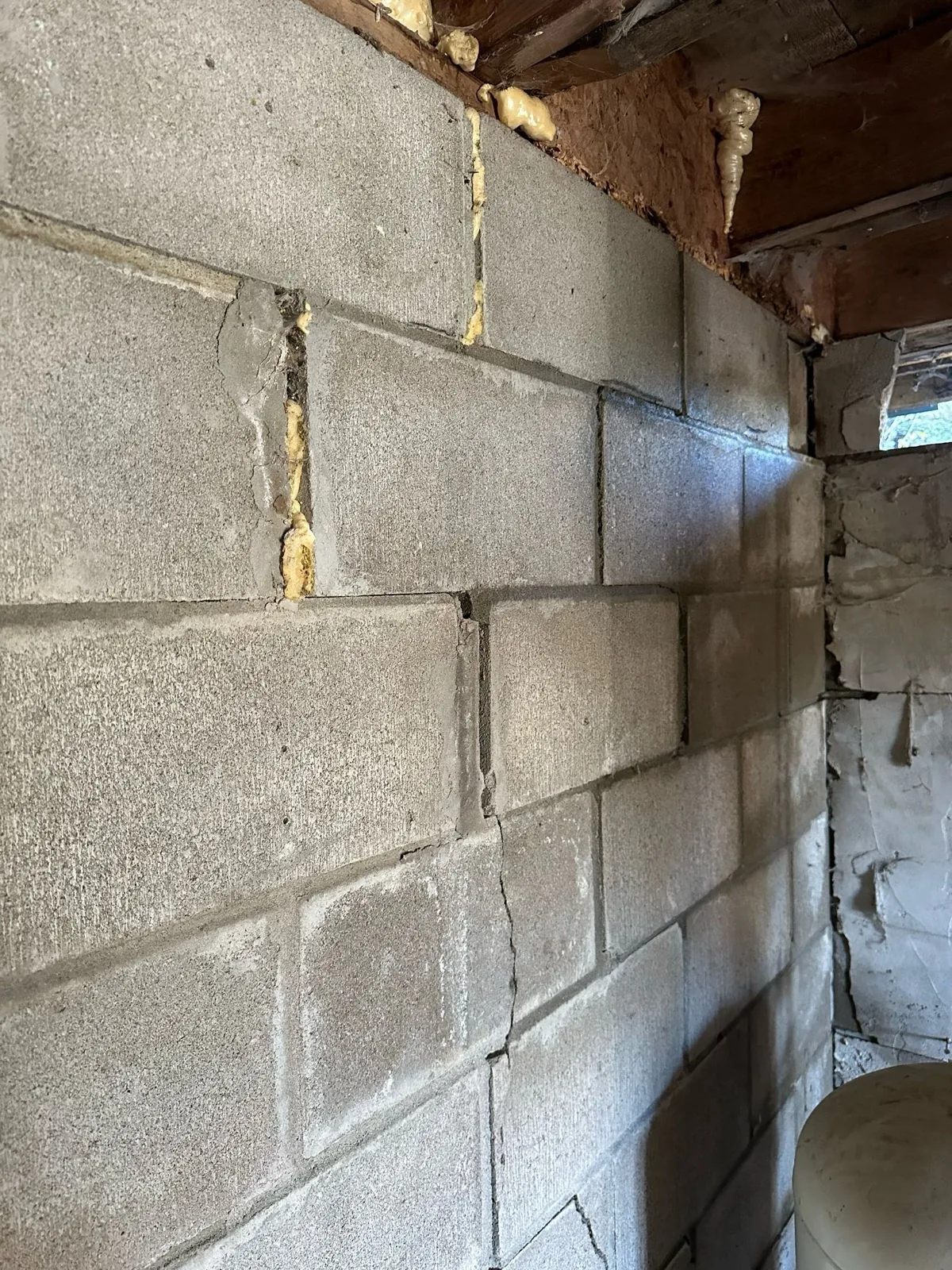
Your home's foundation is its backbone, providing stability and support for everything above it. However, over time, various factors such as soil settlement, water movement, freeze-thaw cycles, and natural aging can compromise even a well-built foundation. Knowing what to look for lets you act before small problems become expensive ones.
Visible Cracks
HighHorizontal cracks in block walls indicate lateral pressure and are serious. Diagonal cracks at corners suggest differential settling. Stair-step cracks in mortar joints follow the block pattern. Vertical cracks can indicate shrinkage or settling — width and growth rate matter.
Water in the Basement
HighAny standing water, recurring dampness, or white mineral deposits (efflorescence) on walls indicates water infiltration. Even minor seepage means water is finding a path through your foundation.
Sticking Doors & Windows
MediumWhen frames shift due to foundation movement, doors and windows no longer operate smoothly. This is often one of the first above-grade signs homeowners notice.
Uneven or Sloping Floors
MediumA floor that slopes, bounces, or feels uneven suggests settlement or structural movement below. In basement slabs, this can indicate soil movement or poor compaction under the slab.
Cracks in Walls Above Grade
MediumDiagonal cracks running from door and window corners upward are a classic sign of differential foundation settling. These are above-grade symptoms of a below-grade problem.
Bowing or Leaning Walls
CriticalA basement wall that is visibly bowing inward is under active lateral pressure from the soil outside. This is an urgent structural concern. Do not delay — inward movement indicates the wall is losing the battle against soil pressure.
Musty Odours
MediumPersistent musty smell in the basement — even without visible moisture — indicates condensation or slow seepage feeding mold growth in insulation, framing, or behind drywall.
Increased Pest Activity
Low-MediumInsects and rodents exploit foundation cracks. A sudden increase in pest activity in the basement may indicate new entry points — which are also water entry points.
What to Do If You See These Signs
Don't try to diagnose or self-repair foundation issues. The visible symptom is rarely the full extent of the problem. A professional inspection will assess root cause, structural impact, and the correct repair approach.
Foundation Masters offers free inspections — no obligation, no pressure. We walk your foundation with you, explain what we find, and give you an honest assessment of what needs to be done and when.