
— WATERPROOFING
Basement Waterproofing & Weeping Tile in Sudbury & North Bay
Provided by the best foundation specialists in Sudbury, North Bay & Manitoulin
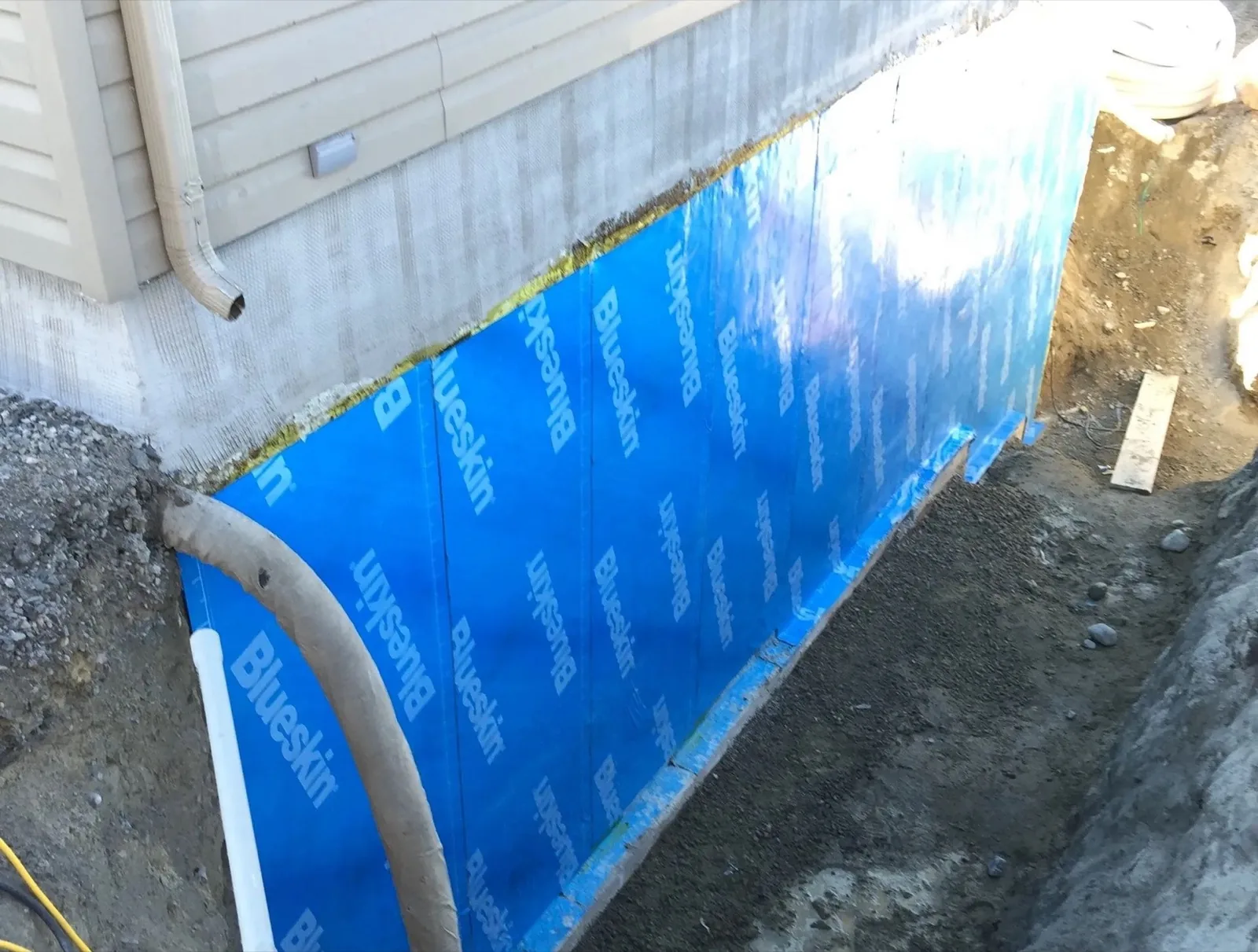
Weeping tile collects groundwater. Waterproofing membranes prevent water penetration. Together, they stop water before it ever reaches your basement.
— HOW IT WORKS
How Weeping Tile Works
- 1
Excavate down to the footing
Carefully expose the base of your foundation wall where water collects.
- 2
Install perforated pipe
Place perforated drainage pipe along the footing, sloped to direct water away.
- 3
Wrap in geotextile + stone
Wrap pipe in geotextile fabric and surround with washed stone for free water flow without clogging.
- 4
Membrane + dimple board
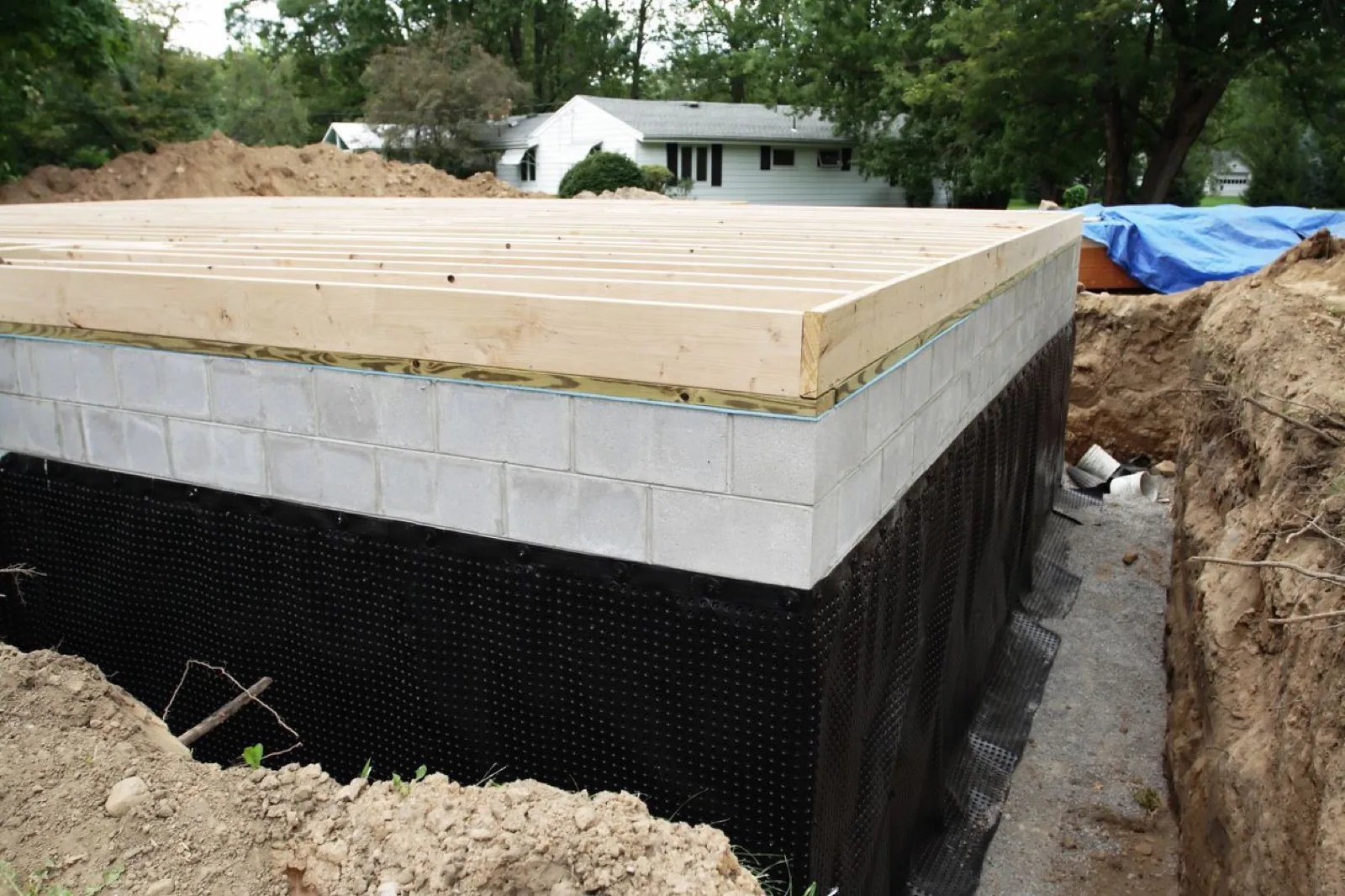
Apply waterproofing membrane to the wall, protect with dimpled drainage board.
- 5
Route to sump or outlet
Direct collected water to a sump pump or storm outlet, away from your foundation.
- 6
Backfill + restore
Compact backfill in lifts, restore grade, and document the install.
— WARNING SIGNS
When Do You Need It?
Early intervention saves money. Consider weeping tile installation if you notice any of these signs:
Water in your basement after rain or snowmelt
White mineral deposits (efflorescence) on walls
Damp or musty odours that won't go away
Visible wall cracks below grade
Recurring sump pump cycling
Wet spots near floor/wall cove joint
A professional assessment identifies the true moisture path and confirms if weeping tile is the proper remedy or part of a broader waterproofing plan. Our specialists proudly serve Sudbury, North Bay, and surrounding areas.
— WHAT'S INCLUDED
A Professional Install Goes Further Than Pipe & Gravel
- ✓ Perforated PVC or HDPE pipe sized for the site
- ✓ Uniform washed stone surround for free flow
- ✓ Geotextile wrap to keep silt out of the pipe
- ✓ Waterproofing membrane on the wall
- ✓ Dimpled drainage board for protection + air gap
- ✓ Routed discharge to sump or storm outlet
- ✓ Backfill, compaction, and grade restoration
- ✓ As-built notes and warranty documentation
— OPTIONAL UPGRADES
Tailor Your System to the Property
- + Battery backup + high-water alarm for sump
- + Window-well drains and covers
- + Downspout extensions and proper grade-away
- + French drain integration
- + Interior cove-joint drainage tie-in
Ask about our maintenance plan to keep your weeping tile installation in peak condition.
— CHOOSING WISELY
Interior vs. Exterior Solutions
Exterior Weeping Tile
Stops water at the source — the gold standard for permanent protection.
Best for:
- • Chronic exterior water loading
- • Clay or silt soils
- • Maximum long-term protection
Interior Drainage
Manages water once it has reached the wall — great for retrofits where exterior is blocked.
Best for:
- • Finished yards, tight lot lines
- • Cove-joint seepage
- • Targeted retrofit projects
Compliance, Materials, and Documentation
We use quality, code-compliant components: perforated pipe sized for the site, uniform washed stone, and geotextiles selected for local soils.
You'll receive as-built notes, discharge routing details, and a warranty package documenting every step — proof of the work performed and protection of your investment.
Why Homeowners Choose Foundation Masters
- ✓ 25-year waterproofing warranty
- ✓ Three generations, 83 years of foundation expertise
- ✓ 5/5 stars on Google
- ✓ Northern Ontario freeze-thaw specialists
- ✓ Detailed scope and itemized quotes — no surprises
— FAQ
Frequently Asked Questions
What's the practical difference between weeping tile and waterproofing — and why do I need both? +
Weeping tile manages groundwater at the footing; waterproofing protects the wall surface. Think of drainage as moving water away, and waterproofing as stopping contact. Both reduce hydrostatic pressure and prolong foundation life. The best installations pair them together.
Will exterior work damage my landscaping or hardscaping? +
Excavation is carefully planned to protect high-value elements. Access paths, plywood mats, and soil stockpiles are managed to minimize disturbance. Crews photograph pre-existing conditions, protect what stays, and restore the site to grade. Anything that has to come up (shrubs, pavers, deck stairs) is discussed in the quote upfront.
What materials are used in modern weeping tile systems? +
Contemporary systems use perforated PVC or HDPE pipe surrounded by washed stone for rapid flow. A geotextile wrap helps keep fines out, and a dimpled drainage board protects the wall while creating an air gap. We size pipe to the site and pair components with documented manufacturer specs.
Ready to Protect Your Basement?
Book an on-site inspection. We'll diagnose the issue, present options, and provide a precise quote — no fluff.